
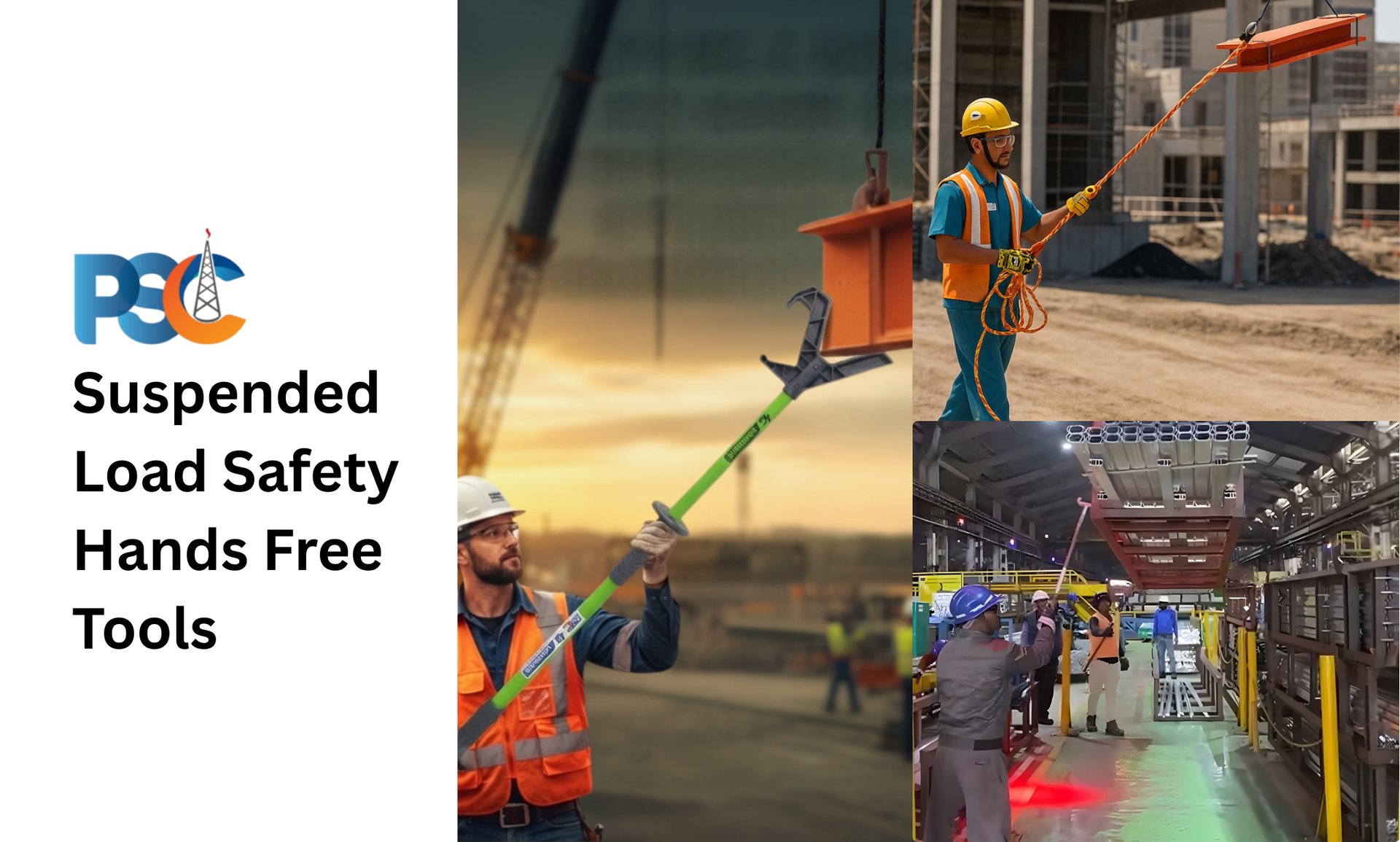
Suspended Load Safety-Hands Free Tools
Protecting Workers from Line-of-Fire & Dropped Object Hazards
What is a Suspended Load?
A suspended load is any object that has been lifted off its resting surface and is temporarily supported by mechanical lifting equipment. The load remains “suspended” until it is safely landed, secured, and released from lifting gear.
Typical lifting equipment includes:
Mobile cranes
Tower cranes
Overhead cranes
Hoists and chain blocks
Winches
Forklifts (when the load is elevated)
Offshore pedestal cranes
When a load is lifted, it stores gravitational potential energy. This stored energy is invisible but extremely dangerous. If the lifting system fails or control is lost, that energy converts instantly into kinetic energy, resulting in severe impact force.
A suspended load can:
Fall (Dropped Object Hazard)
Swing (Pendulum Effect)
Rotate or spin
Shift due to imbalance
Crush workers or structures
The key risk factor is that the load is not in a stable condition. It depends entirely on the integrity of lifting equipment and operator control.
Why Suspended Loads Are High-Risk
Suspended loads are classified as high-risk activities in industries such as Oil & Gas, offshore, construction, shipbuilding, and heavy engineering because failures often result in fatalities.
Dropped Load Risk
A dropped load can occur due to:
Sling failure (wear, cuts, overloading)
Hook disengagement (missing or damaged safety latch)
Shackle pin loosening
Mechanical failure of crane components
Exceeding Safe Working Load (SWL)
Improper rigging configuration
Even a small object falling from height can cause fatal head trauma. The higher the lift, the greater the impact force.
Line of Fire Exposure
Line-of-fire incidents occur when workers position themselves:
Directly under the suspended load
Between the load and a fixed structure
Within the swing radius
Near pinch points during landing
Most serious injuries happen not because the load falls, but because it moves unexpectedly.
Pinch & Crush Injuries
Common during:
Aligning structural members
Guiding loads by hand
Landing heavy components
Working in tight spaces
Hands, fingers, feet, and legs are most frequently injured. Many amputations occur during load landing operations.
Dynamic Load Effects
Suspended loads rarely remain static. Forces increase due to:
Wind load
Sudden crane movement
Shock loading (jerking motion)
Offshore vessel heave and roll
Sudden stopping or braking
Dynamic forces can increase actual load stress beyond rated capacity.
The Golden Rule of Suspended Load Safety
NEVER stand under a suspended load.
This life-saving rule is universally enforced across:
Oil & Gas facilities
Offshore rigs
Construction sites
Fabrication yards
Shipyards
No task is so urgent that it justifies standing beneath a suspended load. Even a brief exposure can be fatal.
Hierarchy of Controls in Suspended Load Safety
An HSE professional applies the Hierarchy of Controls to reduce risk systematically.
1. Elimination
The most effective control is avoiding lifting entirely.
Assemble structures at ground level.
Use rolling systems instead of overhead lifts.
2. Substitution
Replace manual control with mechanical systems.
Use taglines instead of hand positioning.
Use positioning tools instead of manual pushing.
3. Engineering Controls
These physically reduce risk:
Load limiting devices
Anti-two block systems
Certified lifting gear with inspection tags
Safety latches on hooks
Properly rated shackles and slings
Engineering controls reduce dependency on human judgment.
4. Administrative Controls
These manage behavior and planning:
Approved lift plans
Risk assessments (JSA/JHA)
Toolbox talks
Permit-to-work systems
Competent riggers and crane operators
5. PPE (Last Line of Defense)
Safety helmets
Cut-resistant gloves
Steel-toe boots
High-visibility clothing
PPE does not prevent load failure but reduces injury severity.
Safe System of Work for Suspended Loads
Step 1: Lift Planning
A comprehensive lift plan must include:
Verified load weight
Center of gravity identification
Crane capacity chart confirmation
Sling angle calculations
Environmental risk assessment (wind speed limits)
Ground bearing pressure check
Unplanned lifts are one of the main causes of incidents.
Step 2: Equipment Inspection
Before lifting, inspect:
Slings (no cuts, frays, corrosion)
Shackles (pins secured)
Hooks (functional safety latch)
Wire ropes (no bird-caging or broken strands)
Certification validity
Damaged lifting gear must be removed immediately.
Step 3: Establish Exclusion Zone
An exclusion zone ensures no unauthorized person enters the danger area.
Controls include:
Physical barricades
Warning signage
Dedicated banksman/signalman
Controlled access
No worker should enter until the load is landed and secured.
Step 4: Use Taglines (No Hands-on Control)
Taglines help:
Control swing
Prevent rotation
Maintain safe distance
Avoid hand contact
Never guide heavy suspended loads directly by hand.
Step 5: Continuous Communication
Safe lifting requires:
Standard hand signals
Two-way radio communication
One designated signalman
Clear command hierarchy
Conflicting instructions create serious risk.
Critical Risk Factors in Offshore & Industrial Environments
Offshore Operations
Vessel movement increases dynamic forces
Wind amplifies swing
Limited deck space increases pinch hazards
Simultaneous operations (SIMOPS)
Additional supervision is required.
Industrial Plants
Congested pipe racks
Confined spaces
Overhead obstructions
High pedestrian movement
Risk multiplies in tight environments.
Common Accident Causes
Most suspended load incidents result from:
Workers standing under load
Improper rigging configuration
Incorrect sling angles
Overloading
Inadequate supervision
Poor communication
Complacency (“It’s just a small lift”)
Nearly all are preventable.
Best Practices for Suspended Load Control
✔ Always verify actual load weight
✔ Confirm lifting gear rating
✔ Maintain clear exclusion zone
✔ Use mechanical positioning tools
✔ Monitor weather conditions
✔ Stop work if unsafe condition arises
✔ Enforce Stop Work Authority
Human Factor in Suspended Load Incidents
Most investigations reveal:
Time pressure
Overconfidence
Shortcut-taking
Poor hazard awareness
Lack of competency
Strong safety culture significantly reduces these behaviors.
Suspended Load Safety Philosophy
As HSE professionals, we operate under a core principle:
Control the Load. Control the Area. Control the People.
If any of these three elements fail, the risk of serious injury increases dramatically.
Key Life-Saving Rules
Never walk under suspended loads
Never guide heavy loads with bare hands
Always follow lift plan
Maintain safe distance
Verify equipment certification
Use trained and competent personnel
Creating Awareness for Suspended Load Safety Tools
Suspended loads are among the most dangerous hazards across industrial worksites. This platform exists to educate workers, supervisors, and safety leaders about safer alternatives that keep hands and bodies away from overhead and moving loads.
Awareness saves lives. Distance prevents injuries.
Why this Matters?
Every day, workers are exposed to suspended load hazards during lifting, positioning, and material handling activities. When loads are moved using cranes, hoists, forklifts, or rigging equipment, even a small mistake can result in severe injury or fatality.
Many incidents occur not because lifting equipment fails, but because people are forced to guide, steady, or retrieve loads manually. Hands, arms, and bodies enter danger zones where there is no margin for error. Suspended load safety tools exist to eliminate this exposure and create safer working conditions.
What are Suspended Load Safety Tools
Suspended load safety tools are specially designed, hands-free and hands-off tools that allow workers to control, guide, and manage suspended loads without direct hand contact.
These tools help:
Maintain safe distance from loads
Reduce crush, pinch, and struck-by injuries
Improve control during lifting operations
Support safer work practices across industries
They are not optional accessories. They are essential safety controls.
Understanding the Suspended Load Danger Zone
The danger zone is the area beneath and around a suspended load where serious injury or death can occur.
Key facts workers must understand:
Loads can fall, swing, rotate, or shift suddenly
Failure does not always occur straight down
Wind, imbalance, or human error can change load direction
PPE cannot protect against impact from heavy loads
The safest place around a suspended load is always outside the danger zone.
Common Unsafe Practices
Many suspended load injuries occur during routine tasks when risk becomes normalized.
Common unsafe behaviors include:
Guiding loads with bare hands
Walking under suspended loads to save time
Standing too close during positioning
Retrieving taglines manually
Assuming equipment will not fail
These behaviors increase exposure and lead directly to serious accidents.
SOLUTION: SUSPENDED LOAD SAFETY TOOLS
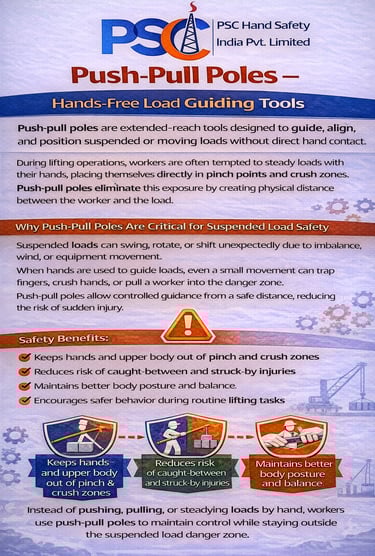
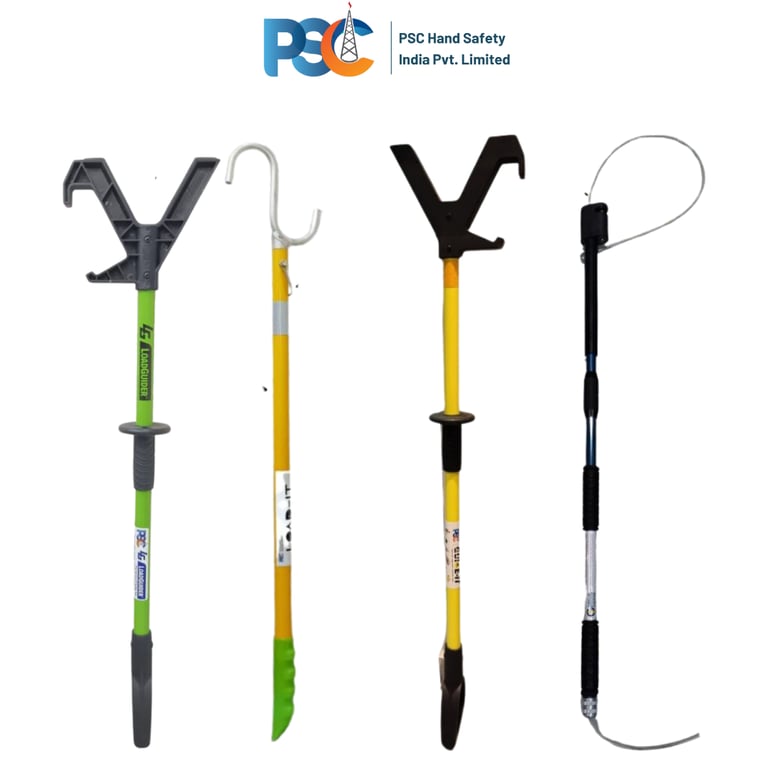
Push-Pull Poles – Hands-Free Load Guiding Tools
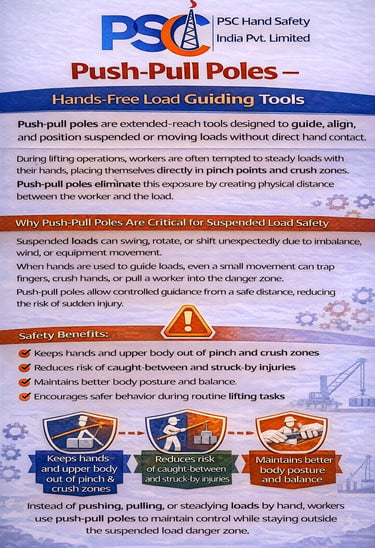
Push-pull poles are extended-reach tools designed to guide, align, and position suspended or moving loads without direct hand contact. During lifting operations, workers are often tempted to steady loads using their hands, placing themselves directly in pinch points and crush zones. Push-pull poles eliminate this exposure by creating physical distance between the worker and the load.
Why Push-Pull Poles Are Critical for Suspended Load Safety
Suspended loads can swing, rotate, or shift unexpectedly due to imbalance, wind, or equipment movement. When hands are used to guide loads, even a small movement can trap fingers, crush hands, or pull a worker into the danger zone. Push-pull poles allow controlled guidance from a safe distance, reducing the risk of sudden injury.
Safety Benefits:
Keeps hands and upper body out of pinch and crush zones
Reduces risk of caught-between and struck-by injuries
Maintains better body posture and balance
Encourages safer behavior during routine lifting tasks
Instead of pushing, pulling, or steadying loads by hand, workers use push-pull poles to maintain control while staying outside the suspended load danger zone.
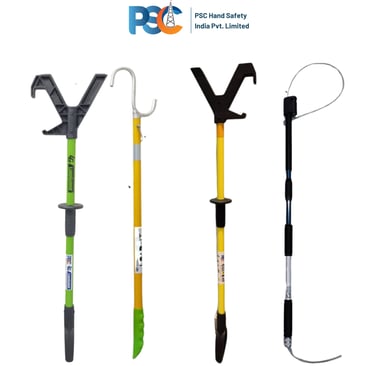
Taglines – Load Control and Stabilization Tools
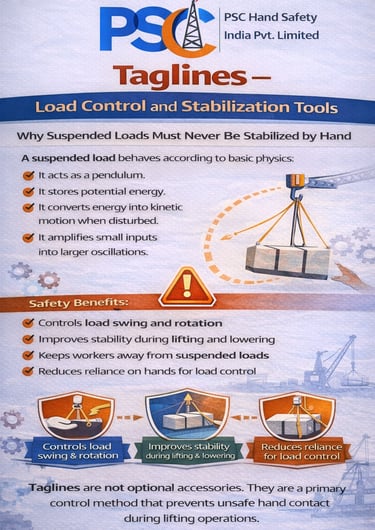
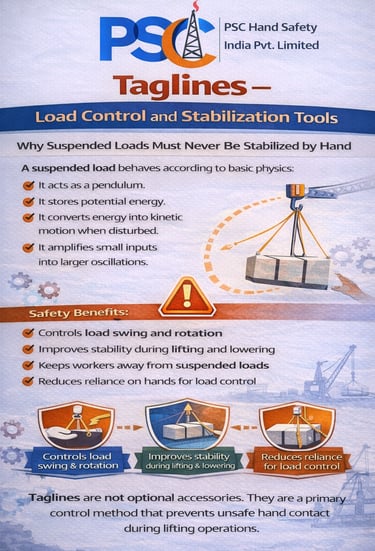
Taglines are ropes or lines attached to suspended loads to control movement during lifting and positioning. Their primary purpose is to prevent uncontrolled swinging, spinning, or drifting of loads while keeping workers at a safe distance.
Why Taglines Are Essential
When loads are lifted, even slight imbalance or environmental factors can cause sudden movement. Without taglines, workers may instinctively reach out to stop a swinging load, placing themselves directly in harm’s way. Taglines provide controlled movement without requiring close contact.
Safety Benefits:
Controls load swing and rotation
Improves stability during lifting and lowering
Keeps workers away from suspended loads
Reduces reliance on hands for load control
Taglines are not optional accessories. They are a primary control method that prevents unsafe hand contact during lifting operations.
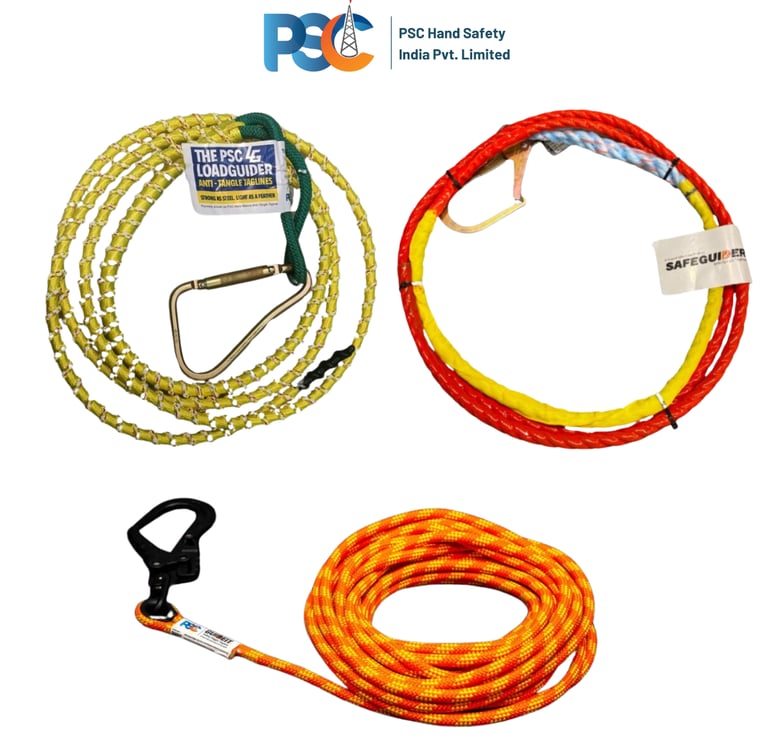
Tagline Retriever Tools – Eliminating Dangerous Retrieval Practices
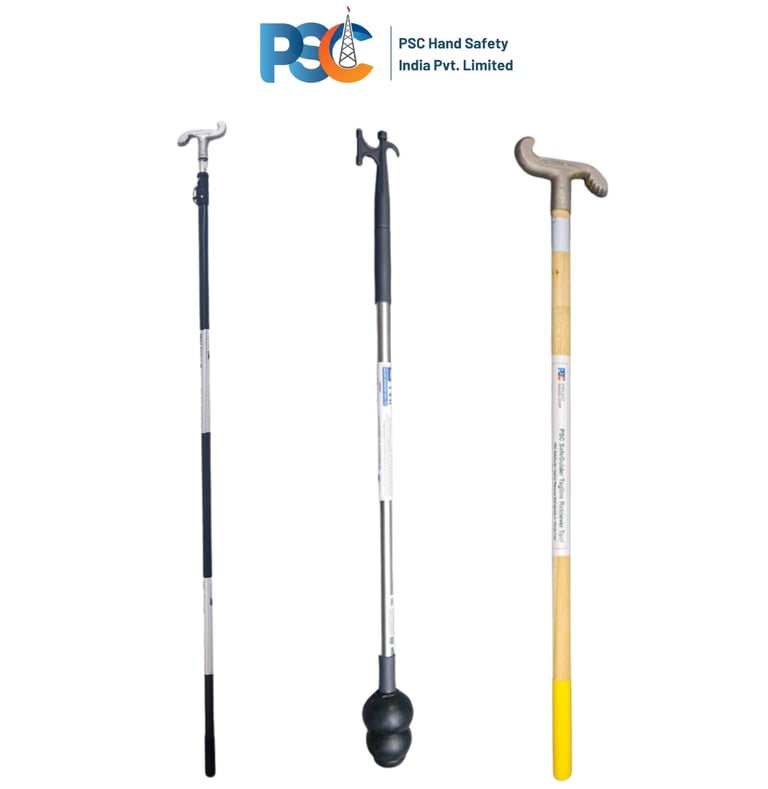
Tagline retriever tools are designed to safely retrieve taglines after lifting operations without requiring workers to walk under or near suspended loads. One of the most dangerous behaviors on worksites is retrieving taglines by approaching a suspended load.
Why Tagline Retrieval Is High Risk
Many serious incidents occur after a lift is complete, when workers move beneath loads to recover taglines. Loads can still shift, lower unexpectedly, or fail during this stage. Tagline retriever tools remove the need to enter the danger zone altogether.
Safety Benefits:
Prevents workers from walking under suspended loads
Eliminates last-minute exposure after lifting
Reinforces exclusion zone discipline
Supports safer end-of-lift procedures
If a task requires entering the suspended load danger zone, the process, not the worker, is unsafe. Tagline retrievers fix the process.
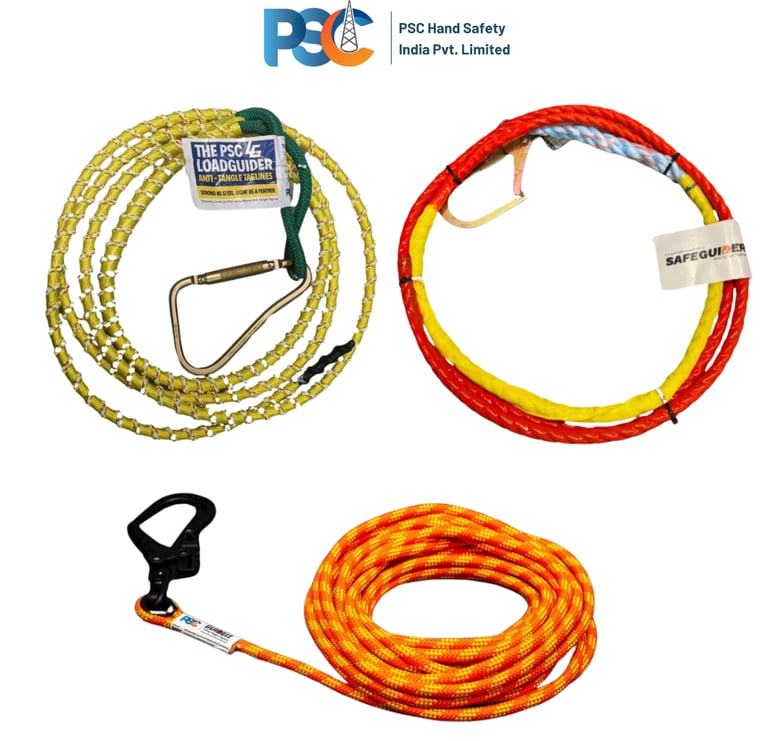
PSC Tagline Ropes
Tagline ropes are used to control swinging, rotation, and unwanted movement of suspended loads.
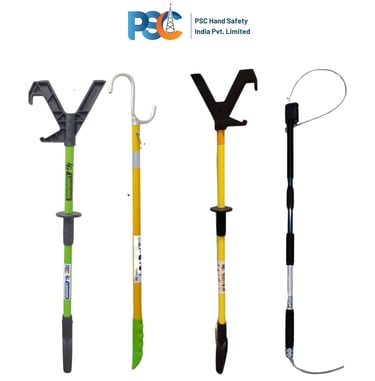
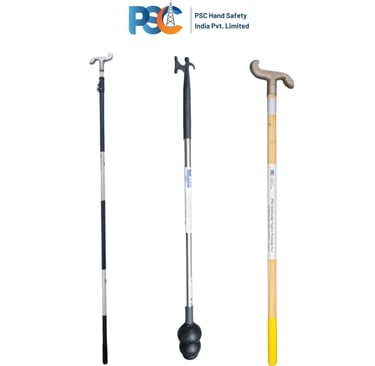
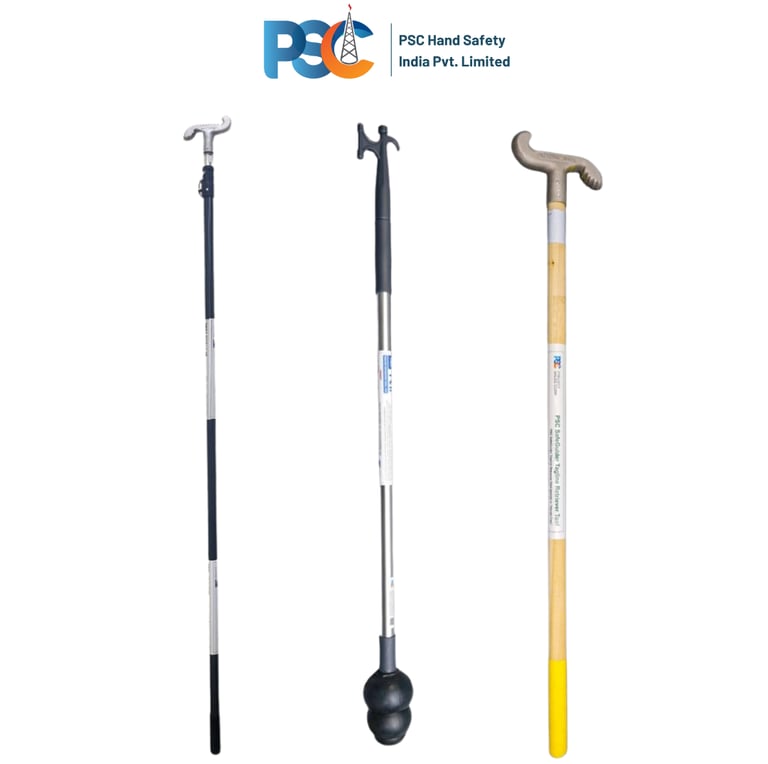
PSC Tagline Retriever Tools
Tagline retriever tools enable safe recovery of taglines without walking under suspended loads.
PSC Push-Pull Poles
Push-pull poles allow workers to guide and position suspended loads without using their hands.
Talk to our safety experts to understand the right tools and safer approaches for your site.
📞 +91 9603166448
Our Product Range
Conclusion
Suspended load safety is not just about cranes or slings.
It is about:
Engineering reliability
Detailed planning
Strict procedural compliance
Human behavior control
Leadership commitment
Every suspended load represents stored energy.
If uncontrolled, it becomes a fatal hazard.
A safe lift is never accidental —
A safe lift is a planned, engineered, and controlled operation.








28, Founta Plaza, Suryabagh, Visakhapatnam-530020. AP India
+91 9100932334
info@projectsalescorp.com
pscrigconsumables.com
3A, 3rd floor, Founta Plaza, Suryabagh, Visakhapatnam-530020. AP India
+91 9603166448
sales@pschandsafety.com
pschandsfree.com
Dubai Silicon Oasis, Building A1, IFZA Business Park, DDP, Dubai, United Arab Emirates
info@pscdubai.com
(+971) 50-457-2844
pscdubai.com
134 Vintage Park Blvd, Ste A #1006, Houston, TX 77070
info@pschoustonllc.com
(984) 322-1807
pschoustonllc.com
© 2026. All rights reserved by Psc Hand Safety India.